




 Lifting hook
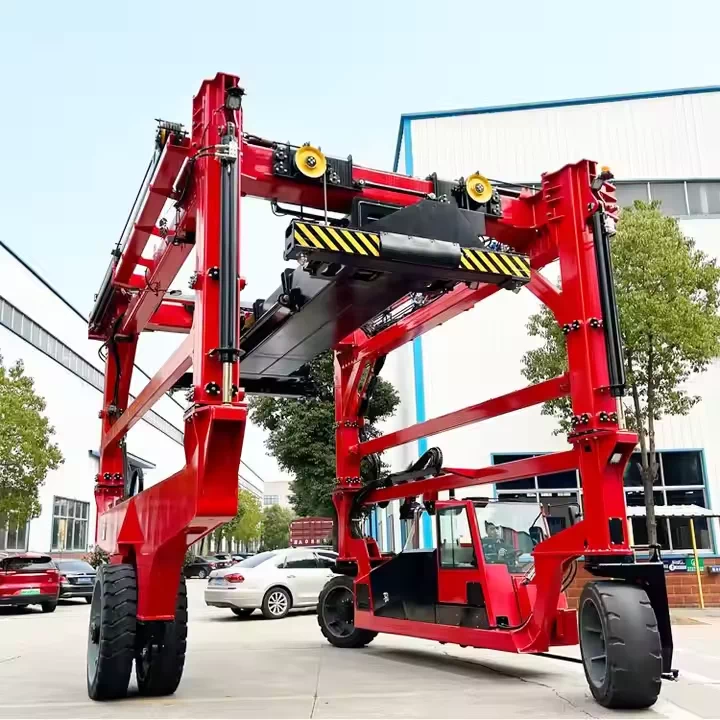


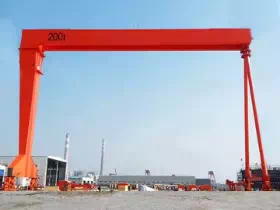
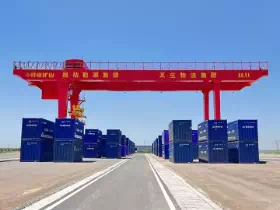
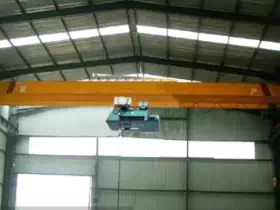
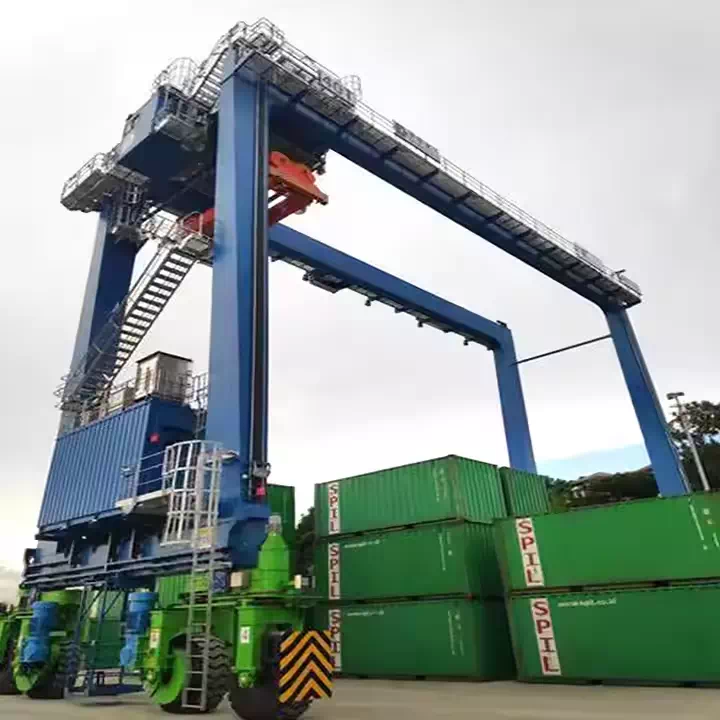
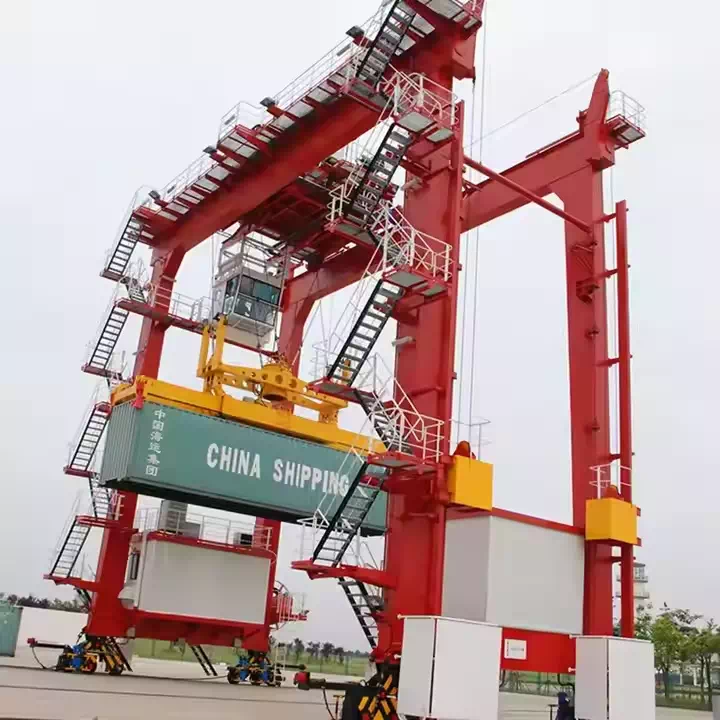
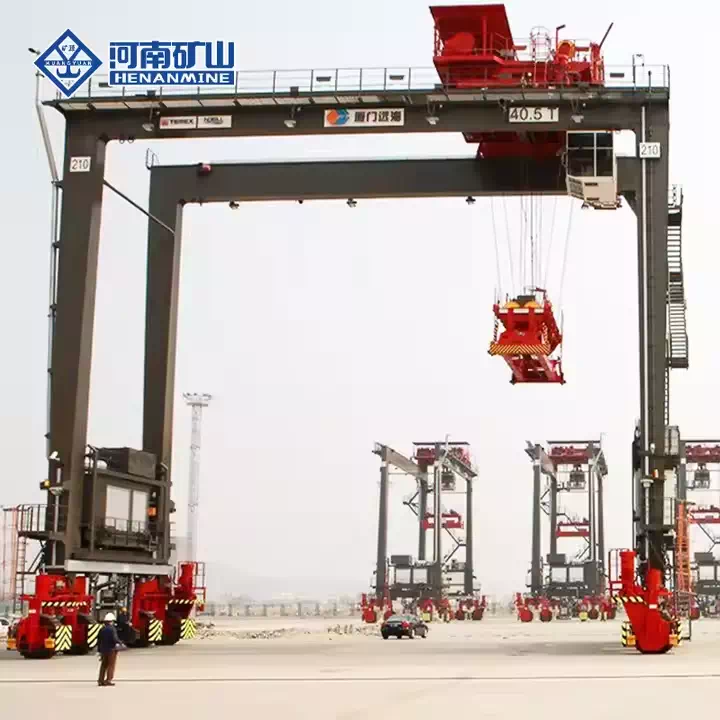
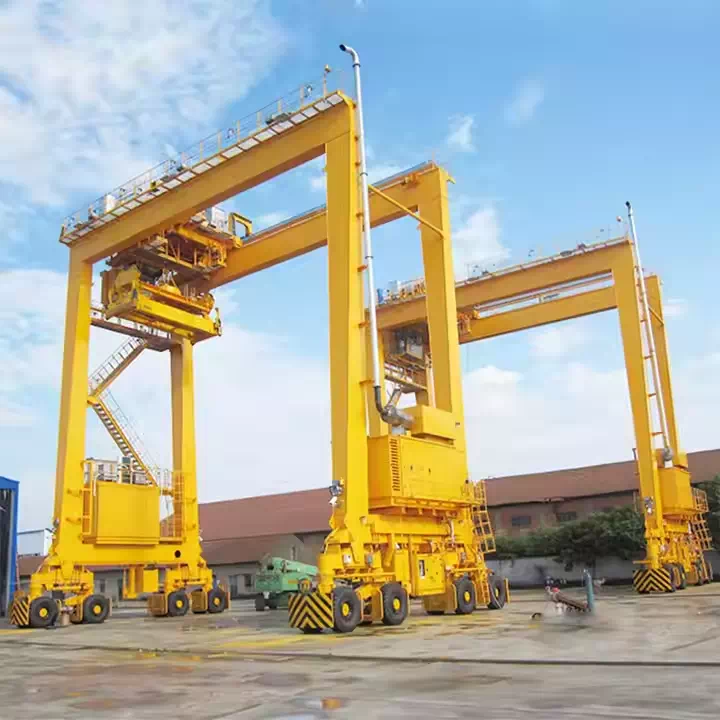
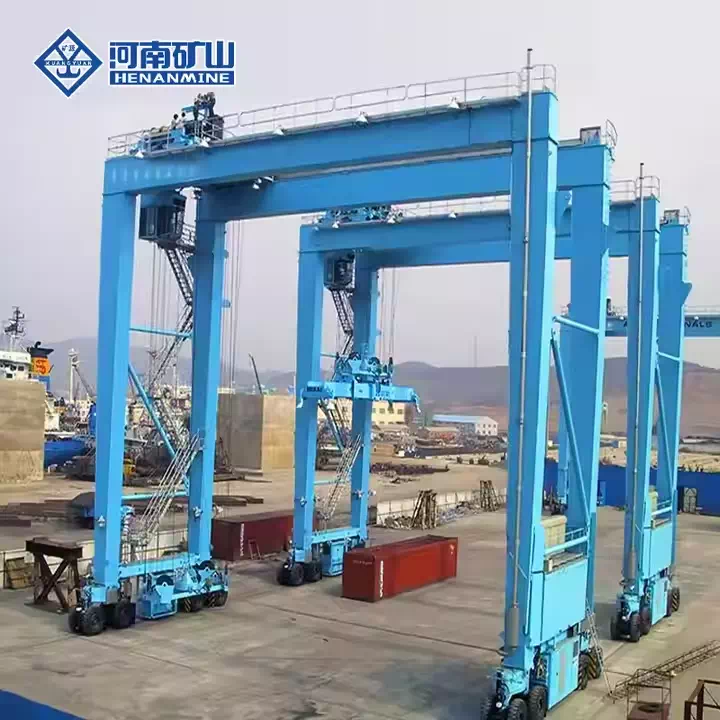
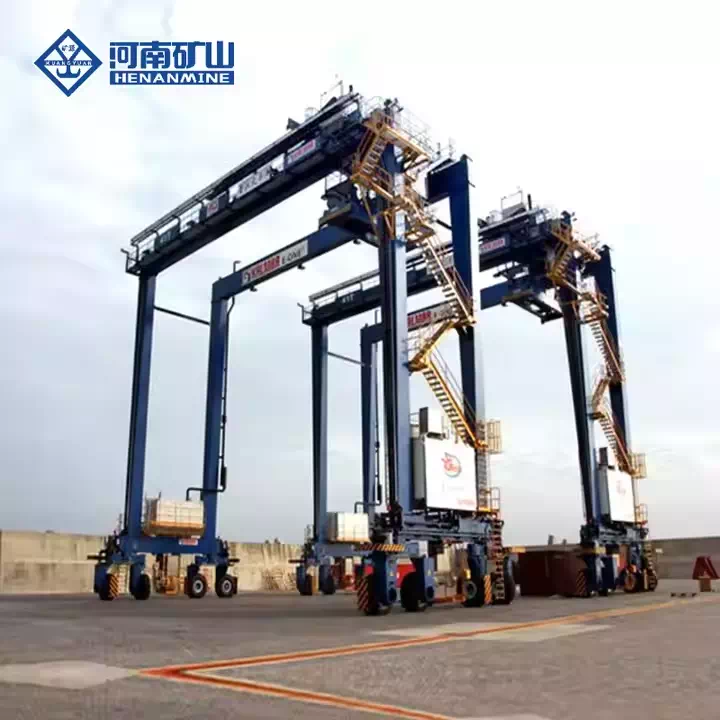
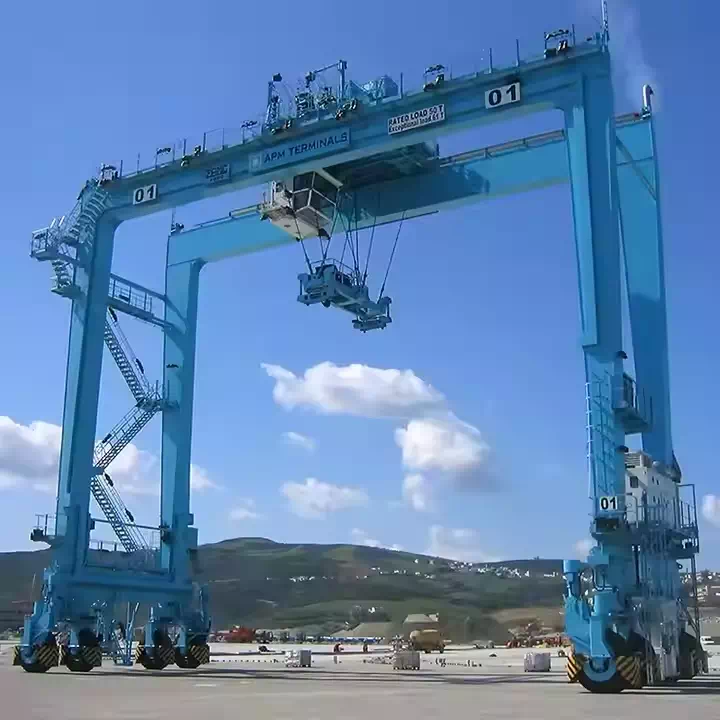
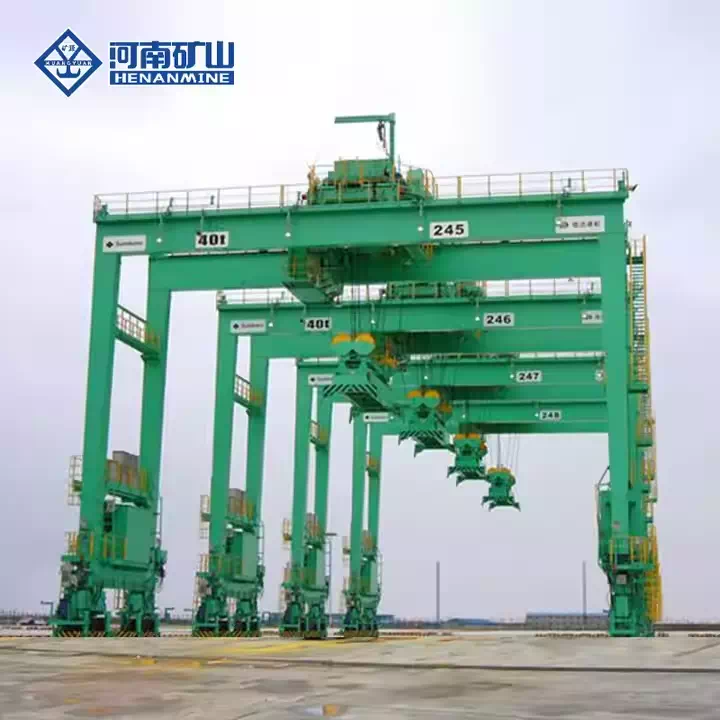
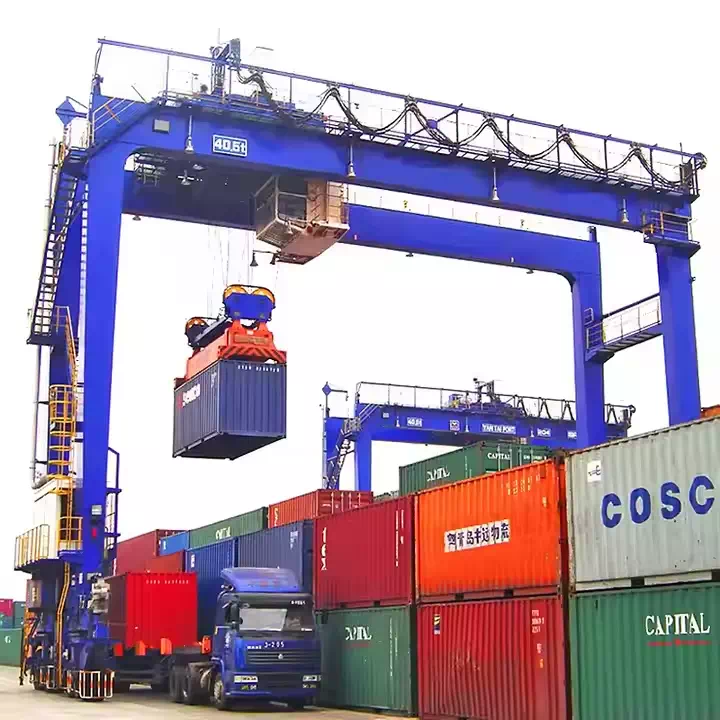
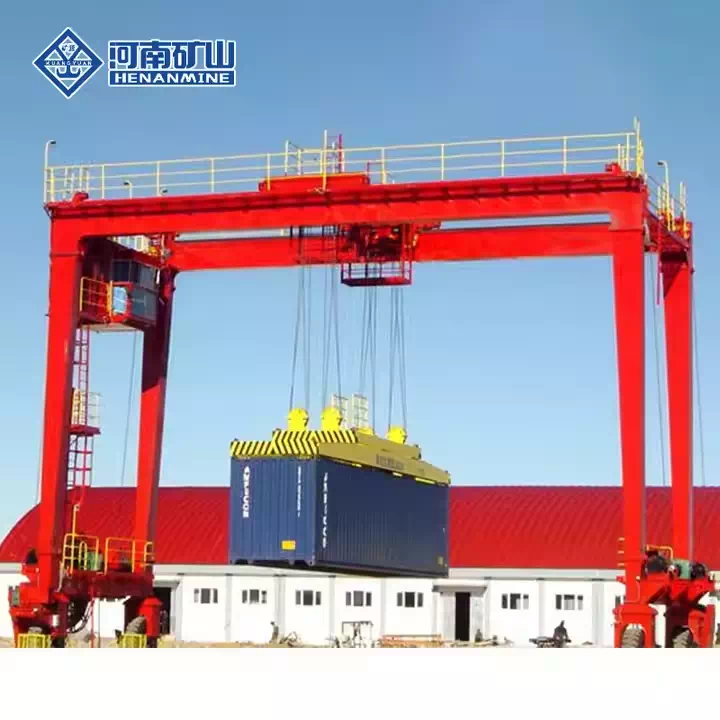
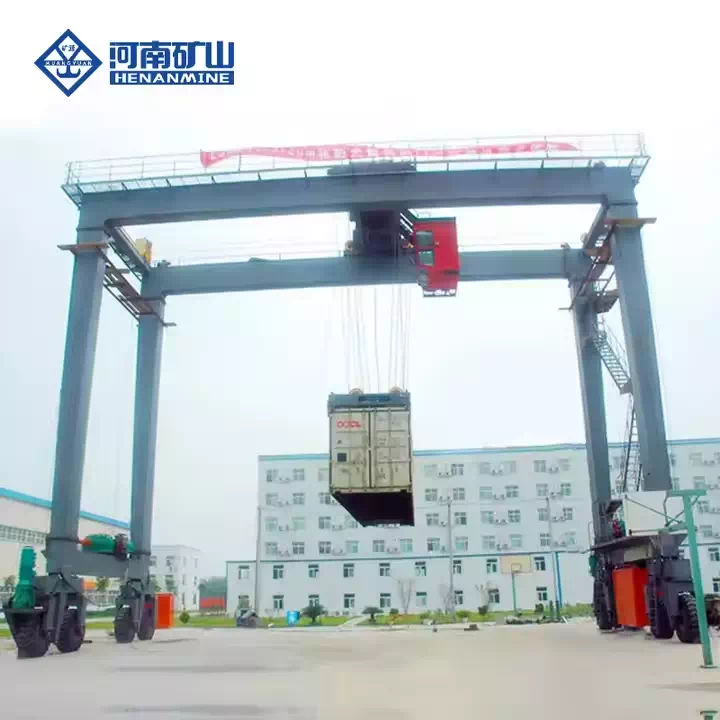
This Rubber Tyre Gantry (RTG) crane is engineered for efficiency and reliability in container handling operations. It features a lightweight yet robust design with a drawing trolley system, ensuring advanced performance, high productivity, excellent maneuverability, and stable operation on uneven ground.
Power & Mobility:
The crane primarily operates via a cable drum power supply. For enhanced flexibility and operational continuity during power outages or when moving between yard blocks, it is also equipped with an onboard diesel generating set. Propelled by its own high-quality rubber tires, which offer good abrasion resistance and flexible turning (protected by tire guards), the RTG provides maximum economic benefits through versatile deployment.
Structural Design:
The double girder gantry structure consists of a box-type welded frame, bridge, support legs, and separately driven travel mechanisms. All crane functions are controlled from a single driver's cabin.
Key Components & Control:
Lifting Trolley: Incorporates a high-duty hoist mechanism.
Container Spreader: Designed for high-precision handling of ISO standard containers, with a twin-lift spreader available as an option.
Control System: The entire crane utilizes a Schneider variable frequency drive and Siemens PLC control system for smooth operation. It is equipped with a Remote Crane Monitoring System (RCMS) and remote control functionality.
Technical Specifications & Features:
Power Supply: Three-phase AC, 50Hz, 380V.
Operating Environment: Temperature range -20°C to +45°C; relative humidity up to 95%.
Wind Resistance: In-service wind speed ≤ 20 m/s; out-of-service wind speed ≤ 44 m/s.
Duty Class: A6-A7.
Ground Gradient: Travel surface gradient < 1%, with localized areas not exceeding 3%.
Custom configurations are available to meet specific operational requirements.
Design & Manufacturing Standards:
Steel Structure: Constructed from Q235B/Q345B carbon steel using seamless forming technology for strength and durability across various temperatures.
Lifting Mechanism: Features a reducer, drum, and motors (protection class F) from reputable brands such as Jiamusi, Nanjing Motor, or ABM.
Hook: Forged from high-quality steel for extended service life.
Wheels: Vacuum-cast for compact structure, easy maintenance, high efficiency, and longevity.
Travel Mechanism: Powered by renowned crane motors and reducers from suppliers like Nanjing Motor or SEW.
Electrical Components: Utilizes premium components from manufacturers such as Chint, Schneider, or Siemens.
Rubber-tyred Container Gantry Cranes are applicable to remove, load and unload international standard containers.
RTG Double Girder Gantry Crane usually called RTG for short, which is employed to stack containers in container storage yards construction to do common lifting and unloading works.
Here are several key application scenarios for a Rubber Tyre Gantry Crane (RTG):
1. High-Density Container Stacking in Port Terminals
RTGs are primarily used within the container yard of a port terminal to stack containers in dense blocks, typically 4 to 6 containers high. Their mobility allows them to serve multiple adjacent rows within a block, maximizing land utilization behind the quay cranes.
2. Transfer Hub Between Transport Modes
They act as the critical link between different modes of transport:
Ship-to-Land: Receiving containers from terminal trucks coming from the quayside and stacking them, and retrieving outbound containers for loading onto ships.
Landside Operations: Picking up containers from road trucks for storage and delivering stored containers to trucks for final road delivery.
3. Servicing On-Dock Rail Yards
RTGs can efficiently work in on-dock or near-dock rail yards. They straddle the rail tracks to directly load containers onto railcars for inland transportation and unload containers arriving by train, facilitating seamless intermodal transfer.
4. Container Sorting and Rehandling Operations
They are essential for internal yard logistics, such as repositioning containers (re-handling) to access a specific box buried in a stack, or sorting containers by destination, vessel, or customer requirement. Their flexibility makes them ideal for this dynamic task.
5. Flexible Deployment in Multi-Use or Congested Yards
Unlike rail-mounted gantries, RTGs are not confined to fixed tracks. This makes them perfect for terminals with complex layouts, congested areas, or where operations need to be adapted quickly to changing demands, such as during peak seasons or vessel surges.
6. Container Maintenance and Depot Operations
In container freight stations (CFS) or depot yards, RTGs are used to handle containers for inspection, repair, cleaning, or stuffing/stripping of cargo. Their ability to lift and precisely position containers is crucial for these value-added services.





 English
 Single Girder Overhead Cranes
 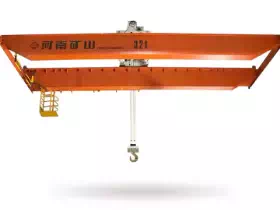 Double Girder Overhead Cranes
 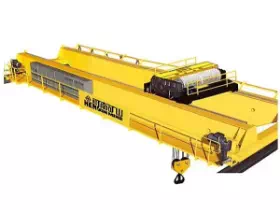 New Types Of Cranes
 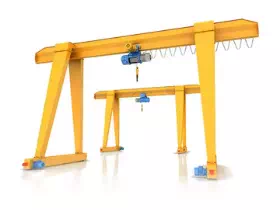 Single Girder Gantry Cranes
 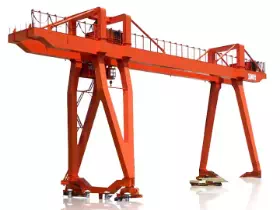 Double Girder Gantry Cranes
  Ladle Cranes
  Electric Hoists
  Jib Cranes
  Port Crane


